How to Choose an Electric Guitar: A Beginner's Buying Guide That Actually Helps
How to choose an electric guitar as a beginner: budget split, body shapes, single coil vs humbucker, neck and bridge, an in-store checklist, and the right practice amp.

Walk into a guitar store for the first time and the wall of electric guitars can feel overwhelming. Every shape and finish looks cool, and the salesperson is talking about "humbuckers," "25.5-inch scale," and "Floyd Roses." This guide explains how to choose an electric guitar as a beginner, step by step: how to split your budget, what body shapes and pickups really do to the sound, which neck and bridge features matter, and exactly what to check before you hand over your card. Instead of crowning one model as the "best electric guitar for beginners," the goal is to give you criteria you can use in front of any guitar, in any store.
Still torn between electric and acoustic? Read our electric vs. acoustic guitar comparison first. If you've already decided on electric, let's get into it.
Beginner electric guitar budget: don't blow it all on the guitar
An acoustic guitar makes sound the moment you strum it. An electric guitar is only half an instrument until you add an amp (or a headphone amp) and a cable. The most common beginner mistake is spending the entire budget on the guitar and then buying whatever amp the leftover money allows. What you hear while practicing depends on the amp at least as much as on the guitar, so this split matters more than most people expect.
Think in ratios, not price tags
There's no official formula, but a useful rule of thumb is to put roughly 60–70% of your total budget into the guitar and 30–40% into the amp and accessories. Street prices shift with the season, sales, and exchange rates, so planning by ratio stays useful long after any specific dollar figure goes stale.
- Must-haves: an amp or headphone amp, an instrument cable, a tuner (clip-on or app), a strap, a handful of picks, and a spare set of strings.
- Nice to have: a gig bag, a guitar stand, a capo, and a microfiber cloth.
- Set aside: money for a setup. Many shops include a basic adjustment with purchase, but if yours doesn't, budget for one visit to a tech.
Beginner packs (guitar, small amp, cable, tuner, and so on in one box) solve the split for you. Just know that the bundled amp and cable are usually entry-level, so judge the guitar itself carefully using the checklist later in this guide.
Body shapes explained: Strat vs Les Paul for beginners
Most electric guitars fall into a handful of families. Brands use different names, but guitars with similar shapes and construction tend to share a similar sound and feel. Treat the descriptions below as general tendencies — pickups and amp settings can change a guitar's voice dramatically within the same family.
Strat-style (double cutaway)
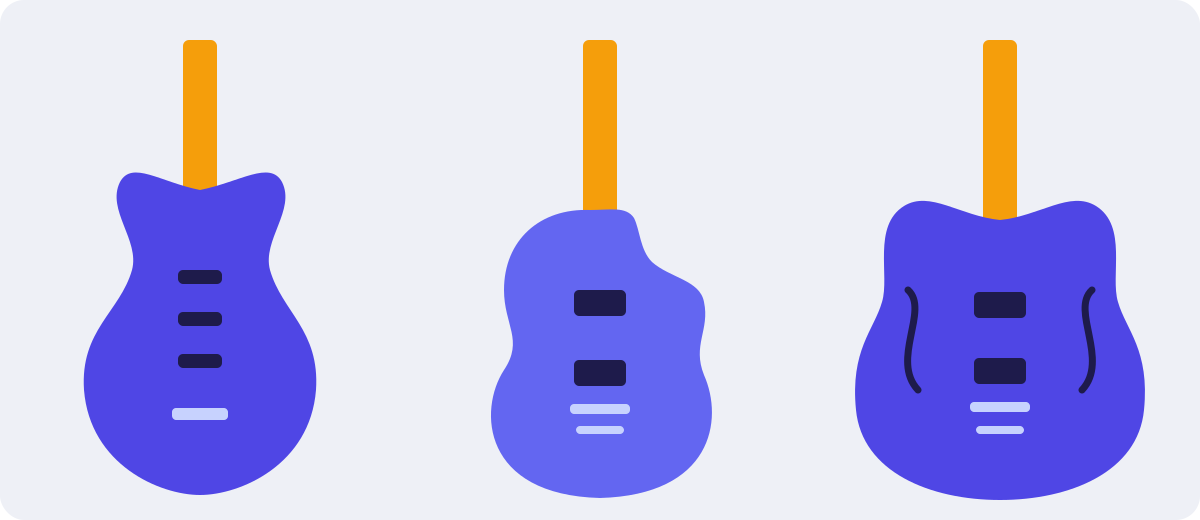
A contoured body with two horns, typically three single-coil pickups and a tremolo bridge. The body is carved where it touches your ribs and forearm, so it's comfortable for long sessions. A five-way pickup selector gives you everything from glassy cleans to the slightly hollow, quacky "in-between" positions. It covers blues, pop, funk, and rock, which is why it's often considered the safest first electric.
Tele-style (single cutaway, slab body)
A simple, flat body with one cutaway, two single coils, and a fixed bridge. The simple design keeps tuning very stable, and the tone is punchy and bright — great for country, indie, and rock rhythm parts. Fewer controls also means less to get confused by.
Les Paul-style (single cutaway, thick body)
A thick body, usually with two humbuckers and a fixed bridge. The sound is fat, warm, and sustains for a long time, which is why it's a classic in hard rock and blues rock. The trade-off is weight: these guitars tend to be heavier, so strap one on and stand up with it in the store before you commit.
SG-style and semi-hollow
An SG-style guitar shares the humbucker setup of a Les Paul-style instrument but has a thinner body with two sharp horns, so it's lighter and gives easy access to the upper frets. Some players notice "neck dive," where the headstock drops when you let go. A semi-hollow has a partly hollow body with f-holes and an airy, rounder tone suited to jazz, blues, and soft rock. The bigger body can feed back at high volume with lots of gain, so it's less ideal for heavy styles.
So, Strat vs Les Paul for beginners? If you want comfort, versatility, and cleaner tones, the Strat-style family is the easier starting point. If the music you love is built on thick, saturated riffs and you don't mind extra weight, a Les Paul-style guitar will get you there faster. Neither one is "easier to learn" in any meaningful way.
Single coil vs humbucker: reading pickup configurations
If you only remember one spec, make it the pickups. They turn string vibration into an electrical signal, and they change the character of the sound more directly than body shape does. There are two main types, depending on whether the pickup has one coil or two.
Single coil: bright and articulate
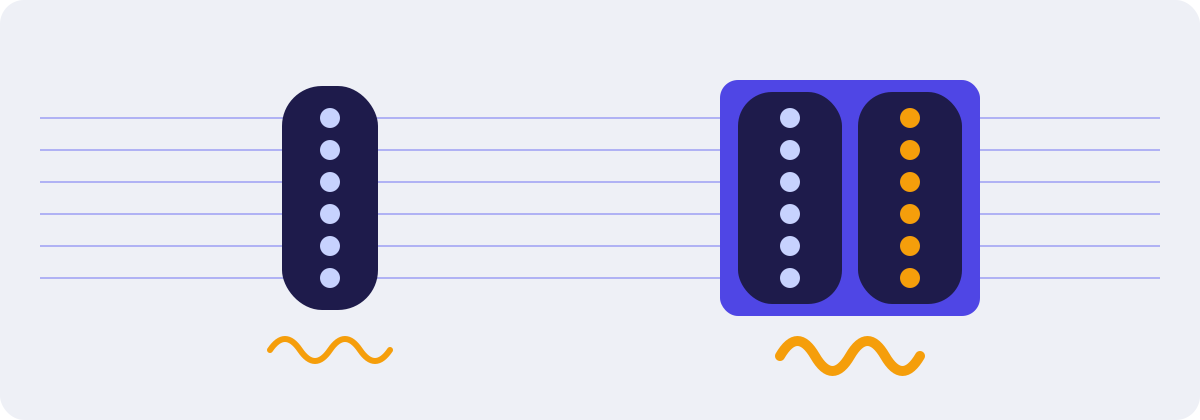
A narrow pickup built around one coil. The highs sparkle and each note in a chord stays distinct, which shines in clean tones, funk rhythm, and arpeggios. The downside is a susceptibility to electrical hum — that steady "mmm" that gets louder near computers, dimmers, and fluorescent lights. That's a property of the design, not a defect, so keep it in mind when you test one in a busy store.
Humbucker: thick and powerful
Two coils wound in opposite directions with opposite magnetic polarity, placed side by side. As the name says, it "bucks" (cancels) hum, so it's quiet, and its higher output gives a full, stable sound under distortion. You'll hear humbuckers in hard rock and metal, but also in warm jazz tones. There's also the P-90, a single-coil design with a character somewhere between the two.
HSS, HH, SSS: decoding the letters
Spec sheets usually list pickups from the bridge position to the neck position. H means humbucker, S means single coil.
- SSS: the classic Strat-style setup. Clean, varied, and sparkly.
- HSS: a humbucker at the bridge, single coils elsewhere. You get rock-riff power and single-coil clarity in one guitar, which makes it an excellent choice if you haven't settled on a genre yet.
- HH: two humbuckers. Common on Les Paul-style, SG-style, and rock- or metal-oriented guitars.
Some guitars offer a coil split (often called a coil tap), which turns off one coil of a humbucker for a sound closer to a single coil. It's not identical, but it widens your tonal palette.
Neck and bridge: finding a beginner guitar that fits your hands
You can shape tone with an amp, but playability lives in the neck and bridge. You'll hold the neck every day, so pick the guitar up and play it rather than relying on the spec sheet.
Scale length: 25.5" vs 24.75"
Scale length is the vibrating string length from the nut to the bridge saddle. The 25.5-inch scale common on Fender-style guitars puts strings under slightly more tension at the same tuning, giving a tighter, brighter sound. The 24.75-inch scale common on Gibson-style guitars has a little less tension, so strings feel slinkier, bends come easier, and the frets sit slightly closer together. Smaller hands or sore fingertips may appreciate the shorter scale, but the difference is subtle — trust your hands over the numbers.
Neck profile and fret count
The profile is the shape of the back of the neck: rounded C, chunky U, pointed V, or thin and flat. A thin neck isn't automatically easier. Players with larger hands often find chords more comfortable on a medium or fuller neck. Rest your thumb behind the neck, play a few open chords and a barre chord, and notice whether your wrist has to bend sharply. Fret count is usually 21, 22, or 24; unless you're planning a lot of high lead work, it won't matter much at the beginner stage.
Bridge: fixed vs tremolo vs Floyd Rose
- Fixed bridge (hardtail): easy string changes and the best tuning stability. The least hassle for a beginner.
- Standard (synchronized) tremolo: lets you add gentle vibrato with a whammy bar. Used moderately, it holds tune well, and it's what most Strat-style guitars have.
- Double-locking tremolo (Floyd Rose style): returns to pitch even after dramatic dives, but string changes and alternate tunings become a project. Changing one string shifts the pitch of the others, and you have to unlock and relock the nut. Unless shred-style metal is your goal, skip it on your first guitar.
Body and fretboard wood: how much does it matter?
Spec sheets list body woods like alder, ash, mahogany, basswood, and poplar, and fretboards like rosewood, maple, and ebony. How much body wood affects the sound of a solid-body electric is a long-running debate among guitarists. What's clear is that pickups, amp settings, and your own touch shape the sound far more than wood does.
At the beginner stage it's more practical to evaluate wood in terms of weight, finish, and feel. A heavy body tires your shoulder over a long practice session; a light one is easier to carry. Rosewood-type boards feel warm and slightly grippy, maple boards look bright and feel smooth, and alternatives such as laurel and pau ferro are now common too. Any of these is perfectly fine on a beginner instrument, so go with your taste. Where you should be picky is the stuff that touches playability and tuning directly: tuners, the nut, and fret finishing.
In-store and used guitar checklist
Two guitars of the same model can be in very different shape. If you buy online, run through this list as soon as the box arrives and contact the seller within the return window if something's off. In a store, asking to plug into an amp and play is completely normal — no one will think twice.
- Check neck relief. Sight down the neck from the headstock toward the body and look for obvious bowing or twisting. Then fret the low E string at the 1st fret and the last fret at the same time: around the 7th to 9th fret there should be a tiny gap between the string and the fret. A big gap — or none at all — means the truss rod needs adjusting.
- Check the action. Look at the gap between string and fret at the 12th fret. Too high and your fingers will hurt fast; too low and the strings buzz against the frets. If chords near the 1st fret feel unusually stiff, the nut may be cut too high.
- Feel the fret ends. Slide your hand along both edges of the fretboard. In dry weather the fretboard can shrink so fret ends poke out and scratch your hand (often called fret sprout). It's fixable, but you want to know before you buy.
- Listen for electronics noise. Plugged in, sweep each volume and tone knob through its full range and click the pickup selector through every position. Listen for crackling, dropouts in certain positions, or noise when you wiggle the cable in the jack. Learn to tell the steady hum of single coils apart from the scratchy crackle of a bad connection.
- Test tuning stability and intonation. Tune up, do a few bends, strum some chords, then check the tuner again. If it drifted a lot, the tuners or nut may be the problem. Also compare the 12th-fret harmonic with the fretted note at the 12th fret — if they're close, intonation is roughly in order.
Extra checks for a used electric guitar
- Fret wear: deep grooves under the strings in frets 1–5 cause buzzing and may mean a fret job is coming.
- Headstock and neck joint cracks: guitars with angled-back headstocks are especially prone to headstock breaks if they fall over. Any repair should be reflected in the price.
- Truss rod headroom: sometimes the rod is already cranked as far as it goes. Ask the seller about adjustment history.
- Modifications and authenticity: check whether pickups or wiring were swapped, and for famous brands, look at serial numbers and build quality to rule out counterfeits. If it's your first time, bring a friend who plays.
Beginner guitar brands and the best fit for your genre
The brand lines most often recommended to beginners each have a recognizable personality. Quality can vary by production year and factory even within a line, so let the individual guitar's condition outweigh the logo.
- Squier: Fender's affordable brand, offering Strat- and Tele-style designs at accessible prices.
- Epiphone: Gibson's affordable brand, centered on Les Paul-style, SG-style, and semi-hollow designs.
- Yamaha Pacifica: Strat-inspired designs, many with an HSS layout, frequently mentioned for consistent build quality and versatility.
- Ibanez: known for thin, fast necks and HSS or HH configurations, popular with rock and metal players. Some models have double-locking tremolos, so check the bridge before you buy.
PRS SE, Schecter, and Cort also make solid entry-level and intermediate lines. Here's how the options map to genres:
| Music you want to play | Body family | Pickup layout | Notes |
|---|---|---|---|
| Not sure yet / a bit of everything | Strat-style | HSS | Covers cleans through rock riffs |
| Blues, pop, funk rhythm | Strat-style, Tele-style | SSS, SS | Clear, articulate single-coil tone |
| Indie, country, rhythm guitar | Tele-style | SS | Punchy tone, very stable tuning |
| Hard rock, blues rock | Les Paul-style, SG-style | HH | Thick tone, long sustain |
| Metal, technical rock | Superstrat | HH, HSS | Locking tremolos add maintenance |
| Jazz, soft rock | Semi-hollow | HH | Round, airy tone |
Treat the table as a starting point. Plenty of players play funk on Les Paul-style guitars and metal on Strat-style ones. If a guitar that looks like your hero's makes you want to practice every day, that's a perfectly valid reason to choose it.
Choosing a practice amp and why a setup matters
A small amp is plenty
For home practice, a small solid-state or modeling amp in the 10–30 watt range is all you need. Tube amps are perceived as much louder at the same wattage, which can make them harder to use at apartment-friendly volumes. When choosing an amp, look for:
- A headphone output: essential if you share walls. Being able to practice late at night is how practice time adds up.
- Modeling: digital recreations of different amps and effects give you clean, crunch, and high-gain tones in one box — handy when you're still exploring styles.
- AUX input or Bluetooth: play songs through the amp and jam along, which makes learning songs much easier.
Short on space? A headphone amp that plugs straight into the guitar's jack, or an audio interface with amp-sim software, also works. If you plan to jam with friends later, though, it's worth owning at least one amp with a real speaker.
A good setup changes everything
A setup adjusts neck relief, action, intonation, and nut height to suit the player. Entry-level guitars often leave the factory with fairly high action, which makes the same practice more painful and keeps chords from ringing cleanly. Beginners tend to blame themselves ("I'm just bad at this") when the real issue is the adjustment. Ask whether the store includes a basic setup, and if not, have a tech do one.
Your first month with the guitar
Once the guitar is home, consistency is everything. Our guitar self-study guide lays out what to practice and in what order. One thing that trips up a surprising number of new electric players isn't chords — it's rhythm. A riff with syncopated sixteenths or a funk part full of rests can make sense in your head while your hands keep drifting off the beat. This is where Rhythm Helper can help: enter the riff's rhythm as notes and rests, set a slow tempo, and play it back. It draws the rhythm as notation and highlights the note you should be playing in time with a click, so it's much easier to see exactly where you lose the beat than with a metronome that only counts pulses. It doesn't handle pitch, so learn the fingering on the guitar and the rhythm in the app. For more on strumming patterns, see guitar strumming rhythm practice, and if a band is in your future, read the band ensemble practice guide.
Frequently asked questions
What is the best electric guitar shape for beginners?
If you haven't settled on a genre, a Strat-style body with an HSS pickup layout is the most versatile choice, because it covers clean tones and rock riffs in one guitar. That said, if a particular shape makes you excited to pick it up every day, that's a good reason to choose it.
Single coil vs humbucker: which is better for a beginner?
Neither is easier — they just sound different. Single coils are bright and articulate and excel at clean tones; humbuckers are quieter and thicker and excel with distortion. If you want both, look for an HSS guitar or one with a coil split.
Are beginner electric guitar starter packs worth it?
They're a convenient way to get an amp, cable, and tuner all at once. The included accessories are usually basic, so inspect the guitar itself — neck relief, action, and tuning stability. Upgrading just the amp later can make a big difference in sound.
How many watts should a beginner practice amp be?
For home practice, a 10–30 watt solid-state or modeling amp is plenty. In an apartment, check for a headphone output before worrying about wattage. Rehearsal studios usually provide larger amps if you start playing with a band.
Can I play electric guitar with small hands?
Absolutely. A shorter 24.75-inch scale has slightly closer frets and lower string tension, which can feel easier. Neck shape matters too, so try several guitars, and get a setup with lower action after you buy.
How should I practice rhythm when learning guitar on my own?
Get comfortable with a metronome first, then isolate the rhythm of a riff and practice it with claps or muted strums before adding the notes. A rhythm practice app that plays back exactly what you enter and highlights the current note lets you work through tricky syncopation starting at slow tempos.