
Band Rehearsal Tips: How to Rehearse With a Band and Actually Play in Time
Practical band rehearsal tips: prep a song map, agree on BPM, use a click track, run the rehearsal space in a smart order, fix tempo drift, and review recordings so every band practice counts.
Every musician who has played in a group knows the feeling: the song is solid in your bedroom, then falls apart the moment the whole band counts it in. That's because band rehearsal is a different skill from practicing alone. Playing your part correctly is only half the job — the other half is listening, locking into a shared tempo, and moving through the song together. These band rehearsal tips walk through what to prepare before you book the room, how to use a two-hour session well, and what to do when the band just won't play in time.
Whether you're in your first garage band or a working cover band whose practices have turned into "run the set twice and go home," you'll find checklists here you can use at your very next rehearsal.
Practicing alone vs. ensemble practice: what changes
The goal of solo practice is simple: get to the point where you can play your part without mistakes. The goal of ensemble practice is different: make several people sound like one song. The two overlap, but they have different priorities.
- Your reference point moves. Alone, you play against a metronome or the original recording. In a band, the reference is the drummer's hi-hat and kick and the bassist's line. You can be perfectly "correct" and still sound wrong if you're not with the band.
- Your ears point outward. In solo practice you focus on your own sound. With a band, you should be listening to yourself only about half the time and to everyone else the rest of the time.
- You can't stop. Alone, you stop at a mistake and try again. In a band, the far more valuable skill is recovering — landing on beat one of the next bar no matter what just happened.
- Time is expensive. Rehearsal space is rented by the hour, and getting four or five schedules to line up is hard. Fixing something in the room that you could have fixed at home spends everyone's time, not just yours.
So the core rule of good band practice is this: finish everything you can do alone before rehearsal, and spend the room on things you can only do together. If your hands still can't keep up with the song, more solo practice will help more than another rehearsal. We cover the fundamentals of internal time in our guide to rhythm and timing practice.
How to prepare for band rehearsal: five things to settle first
Plenty of rehearsals stall because the band only starts asking "how many times do we repeat the chorus?" or "how does the ending go?" after everyone is plugged in. Settle these five things in your group chat or a shared doc before you load in.
1. Build a song map (cue sheet)
A song map breaks the tune into sections — intro, verse, pre-chorus, chorus, bridge, outro — and lists how many bars each one lasts. Add the important cues to each section ("bass and drums only," "everyone stops on bar 4") and nobody gets lost mid-song.
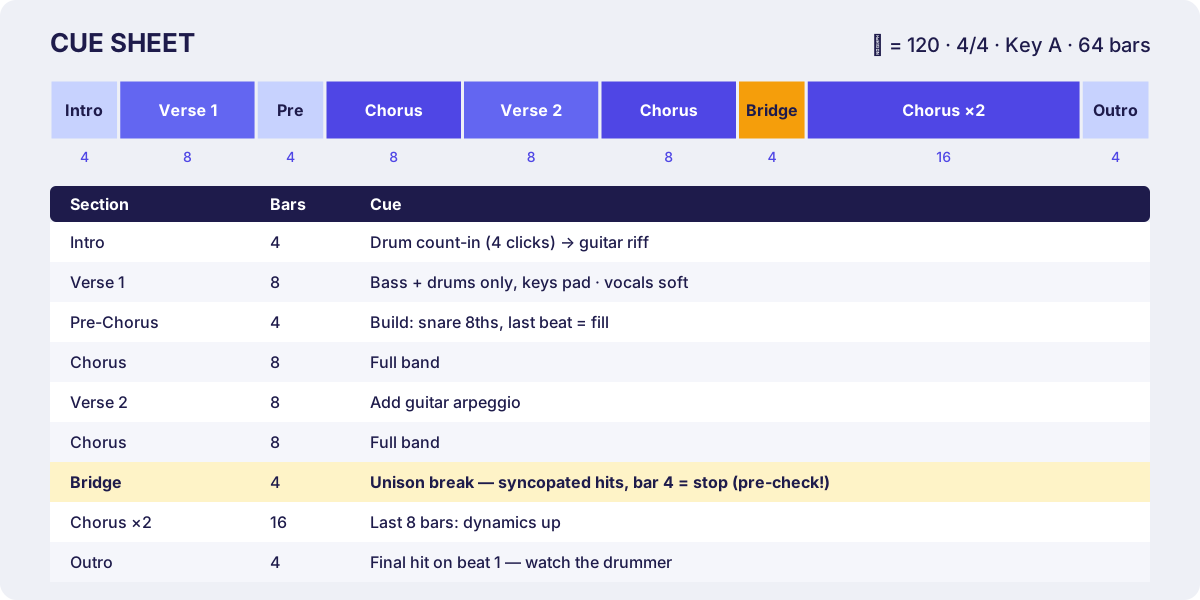
Make a map even when you're covering a song note-for-note. If the record fades out, you'll need a live ending. You might cut a chorus or double one. And if someone in the band doesn't read music, section names and bar counts are enough for everyone to communicate. If you want a refresher on the basic symbols, see how to read sheet music.
2. Agree on a tempo — as a number
"Let's do it at the original tempo" is vaguer than it sounds. Find the original BPM and post the actual number. If that tempo is a stretch for the band right now, plan to start slower on purpose — say 10 to 15 percent under — for the first few rehearsals and step it up from there. Just as important: everyone should practice at home at that agreed BPM. If the guitarist has been woodshedding the song at 140 and the drummer at 128, the first ten minutes in the room will be a tug-of-war.
3. Confirm the key and tuning
If you're moving the key to suit the singer, decide in advance whether the guitarists will capo or tune down a half step, and whether the keyboard player will transpose. Changing keys in the room means everyone relearns chord shapes on the clock, and twenty minutes disappear fast.
4. Divide up the parts
With two guitars, decide who plays rhythm and who plays lead. If the keys and guitar live in the same register, decide who holds a pad and who lays out. Nobody needs to play everywhere. One instrument dropping out of the verse is often all it takes to make the chorus hit harder.
5. Nail down the tricky rhythms ahead of time
The spots that fall apart most often are unison breaks where everyone plays the same rhythm, syncopated hits that land off the beat, and stops where the band cuts out and comes back in. People tend to remember these rhythms slightly differently, which leads to the classic rehearsal argument: "Wait, isn't that a sixteenth note?"
The surest fix is to write the rhythm down before rehearsal. For example, you can enter the notes and rests for those bars into Rhythm Helper and play them back at your agreed BPM — it highlights each note as it plays and clicks the rhythm exactly as written. Have each member enter and listen to the same figure, or gather around one screen before you start, and everyone walks in with the same rhythm in their head. The free version covers two bars, which is plenty for a short break. With Pro's two-voice (left/right hand) feature, you could put the guitar hits in the upper voice and the kick drum pattern in the lower one to see how the two parts interlock.
Playing in time with a band
The drums and bass own the groove
In most bands, the drummer is responsible for tempo. The bassist locks to the drummer — especially the kick drum — to build the foundation of the groove. Guitars, keys and vocals sit on top of that foundation.
That means when the tempo wobbles, everyone else should follow the hi-hat and snare rather than their own idea of where the beat is. If each player insists on "their" tempo, the band ends up with several tempos at once. On the flip side, a drummer and bassist who rehearse as a rhythm section on their own will make the whole band noticeably tighter.
How to use a click track in rehearsal
A click track is a powerful tool for holding a band together, but how you use it matters a lot.
- Drummer-only click: The drummer hears the click in in-ear monitors or headphones and everyone else follows the drums. If you play with backing tracks live, this is the standard setup.
- Everyone hears it: The click goes through the PA or a monitor so the whole band hears it. Great for diagnosing a band that keeps speeding up, but at full volume the click is easy to lose.
- Wean off it: Start with the click on. Once the song feels comfortable, use the click only for the intro and first verse, then cut it. Record the take and check whether the tempo holds without it.
On slow songs, a click on every quarter note leaves a lot of space between beats, and that space is where bands drift. Try switching to an eighth-note click, or put the click only on beats 2 and 4 so you practice feeling the backbeat.
One person counts in, the same way every time
If song starts are always ragged, agree on a count-in rule. Usually the drummer counts "1, 2, 3, 4" with sticks or hi-hat and everyone comes in on the next downbeat. For fast songs, a two-bar count ("1, 2 / 1, 2, 3, 4") is safer. Remember that the count-in is the tempo. A sloppy count starts the whole song at a sloppy tempo.
Guitarists who want to tighten up how their strumming sits on the beat should also check out our guide to guitar strumming rhythm practice.
How to run a band practice in the rehearsal space
Here's a running order for a two-hour room booking. The key idea: instead of playing songs top to bottom over and over, give the most time to looping the problem sections.
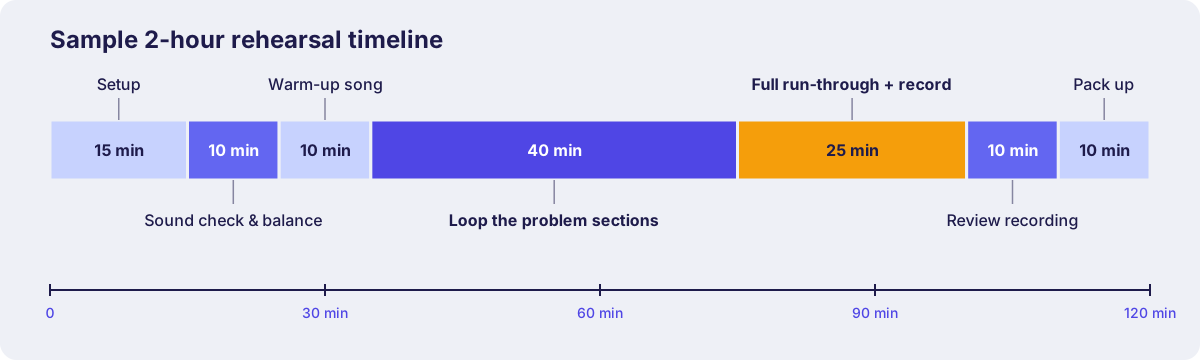
- Set up (about 15 min) Get amps, drums, keys and mics in place and tune up. Having your pedalboard and cables organized before you arrive saves a surprising amount of time. Drummers: set throne height and cymbal positions first.
- Line check (about 10 min) Go one instrument at a time and confirm every mic and amp is working. Everyone else stays quiet while each person checks.
- Balance the volume Use the acoustic drum kit as your reference and bring in bass, then guitars, then keys, then vocals. If you can't hear the singer, the right answer is usually to turn everything else down, not to turn the vocal up.
- Warm-up song Play your most comfortable song once to loosen up hands and ears. Jot down anything you hear, but don't stop to fix it yet.
- Loop the problem sections (the longest block) Use the bar numbers from your song map: "bridge, four bars, five times." Drop the tempo if needed, then bring it back up to speed.
- Record a full run-through Play the song top to bottom to see whether the fixes hold up in context, and record it on a phone. The rule: don't stop, even if someone makes a mistake.
- Review and pack up Listen back briefly, agree on homework for next time, turn the amps down and break down your gear. Clear out on time for the next band.
Why your band can't play in time: common problems and fixes
Most recurring rehearsal problems follow a pattern. Find your band's symptom in the table below.
| Symptom | Common cause | Fix |
|---|---|---|
| Tempo speeds up in the chorus | Excitement pushes everyone forward; rushed drum fills | Record the section with a click and compare; have drums and bass practice holding tempo first |
| Slow songs drag | Players can't sit in the space between beats | Subdivide in eighth notes in your head; keep a steady eighth-note hi-hat |
| The ending never lines up | No agreed ending; nobody is watching for the cue | Write the ending into the song map (e.g., one hit on beat 1) and end on the drummer's or leader's cue |
| Volume wars | Nobody can hear themselves, so everyone turns up | Rebalance against the acoustic drums; angle your amp toward your ears |
| Unison breaks sound messy | Everyone remembers the rhythm differently | Write the rhythm out and share it; clap it together at a slow tempo first |
| People get lost at section changes | Nobody is counting bars | Mark bar counts and cues on the song map; drummer signals with a fill in the bar before |
| Song starts are ragged | No count-in rule | One person counts, at the song's tempo; two-bar count for fast songs |
Rushing in particular is almost impossible to feel while you're playing. Instead of arguing about it, compare a recording against a click or check the BPM at the start and end of the song. Numbers end the debate quickly.
How to review your rehearsal recordings
Lots of bands record every rehearsal and never listen back. A recording only helps if you have a plan for listening to it.
- First pass: just listen. Forget your instrument and listen like an audience member. Write down the three spots that bother you most, with timestamps.
- Second pass: your part only. Follow your own instrument. Are you ahead of the beat or behind it? Are notes cutting off early?
- Third pass: the rhythm section. Is the bass landing with the kick drum? Is the guitar strumming lined up with the hi-hat?
When you talk about what you heard, discuss bars and rhythms, not people. "In bar 3 of the bridge, the guitar and keys are a sixteenth note apart on the off-beat hit" leads straight to a solution; "you're off" doesn't. Also keep in mind that phone mics don't capture low end well — if you can't hear the bass on the recording, don't assume it's a volume problem in the room.
After rehearsal: homework that makes the next practice better
Before you leave, split up what each person will work on before the next rehearsal. Make the goals measurable.
- Weak goal: "Practice the bridge."
- Strong goal: "Play the four-bar bridge five times in a row with no mistakes at 100 BPM with a click; next week, 112 BPM."
For solo instrument practice, isolate only the sections that caused trouble, start slower than the agreed tempo and creep up. If the rhythm itself is confusing, write it down and listen to it. A tool like Rhythm Helper that plays back exactly the rhythm you enter makes it easy to hear the difference between the rhythm you remember and the rhythm on the page. It plays the rhythm for you but doesn't record or grade your playing, so keep using your phone to check your actual performance.
Guitarists who keep disappearing in the mix should also consider that the problem might be gear and role, not technique — our comparison of electric vs. acoustic guitar covers how each one sits in a band.
Band practice etiquette for first-timers
Good etiquette builds trust faster than chops. If you've just joined a band or you're new to rehearsal spaces, these habits will make you someone people want to play with.
- Be on time — ready to play. Don't arrive at the start of the booking; arrive so you can make sound at the start of the booking. Have your gear sorted beforehand.
- Stop playing when people talk. Noodling on guitar or tapping on the snare while someone is talking kills communication. Turn your volume down or take your hands off the instrument.
- Show up prepared. Learning the song in the room spends everyone else's time. It doesn't need to be perfect, but know the structure and your part.
- Critique sections, suggest specifics. "I think we push a little going into the chorus — want to try it once with the click?" lands much better than "you're rushing."
- Protect your hearing. Small rooms get loud. Musician's earplugs protect your ears and often make it easier to hear the balance.
- Treat the room's gear with respect. Turn amp volumes to zero before powering on or off, and put cables and stands back where you found them.
Ensemble practice is ultimately practice in listening to each other. Do your homework before you arrive, use the room for the things only a band can do together, and check yourselves with recordings. Run that cycle a few times and your band will sound different.
Frequently asked questions
What should a band prepare before rehearsal?
A song map with bar counts and cues for each section, an agreed tempo as a BPM number, the key and tuning, who plays what, and the exact rhythm of any tricky spots like unison breaks or syncopated hits. Sharing these before load-in saves a big chunk of room time.
Why does my band keep speeding up?
The most common cause is excitement in loud sections like the chorus, often triggered by rushed drum fills. It's hard to feel while playing, so compare a recording against a click, have the drums and bass practice holding tempo, and then gradually reduce how much you rely on the click.
Should a band rehearse with a click track?
It isn't mandatory, but it's very useful for diagnosing and fixing tempo problems. Bands using backing tracks usually have only the drummer on the click. Other bands can use a click while learning songs, then turn it off and record to confirm the tempo holds without it.
How should we structure a two-hour band practice?
One workable plan: 15 minutes setup, 10 minutes line check and volume balance, 10 minutes warm-up song, 40 minutes looping problem sections, 25 minutes for a recorded full run-through, 10 minutes review and 10 minutes pack-up. The key is giving the biggest block to problem sections.
What if I'm the weakest player at my first band rehearsal?
Knowing the song structure and your part matters more than flashy skills. Simplify hard passages so you can play them dead on the beat, and after rehearsal work on the problem sections at a slower tempo on your own.