
Electric vs Acoustic Guitar: Which Should a Beginner Learn First?
Electric vs acoustic guitar compared: body, strings, sound, playability, gear and noise, plus a goal-based guide to which one a beginner should start on.

"Should I learn electric or acoustic guitar?" is the first question almost every new player asks, and the answers you hear in stores and comment sections tend to contradict each other. This guide breaks down the real difference between electric and acoustic guitar: how each one makes sound, the strings, the tone and genres, how they feel under your fingers, the gear you actually need, and how loud they are at home. At the end, you will find a goal-based recommendation. Spoiler: there is no universal "beginners must start on acoustic" rule. The right first guitar is the one that matches the music you want to play and the place you will practice.
Electric vs acoustic guitar: how they are built
The two instruments look alike at a glance, but they produce sound in completely different ways. Almost every other difference flows from this one.
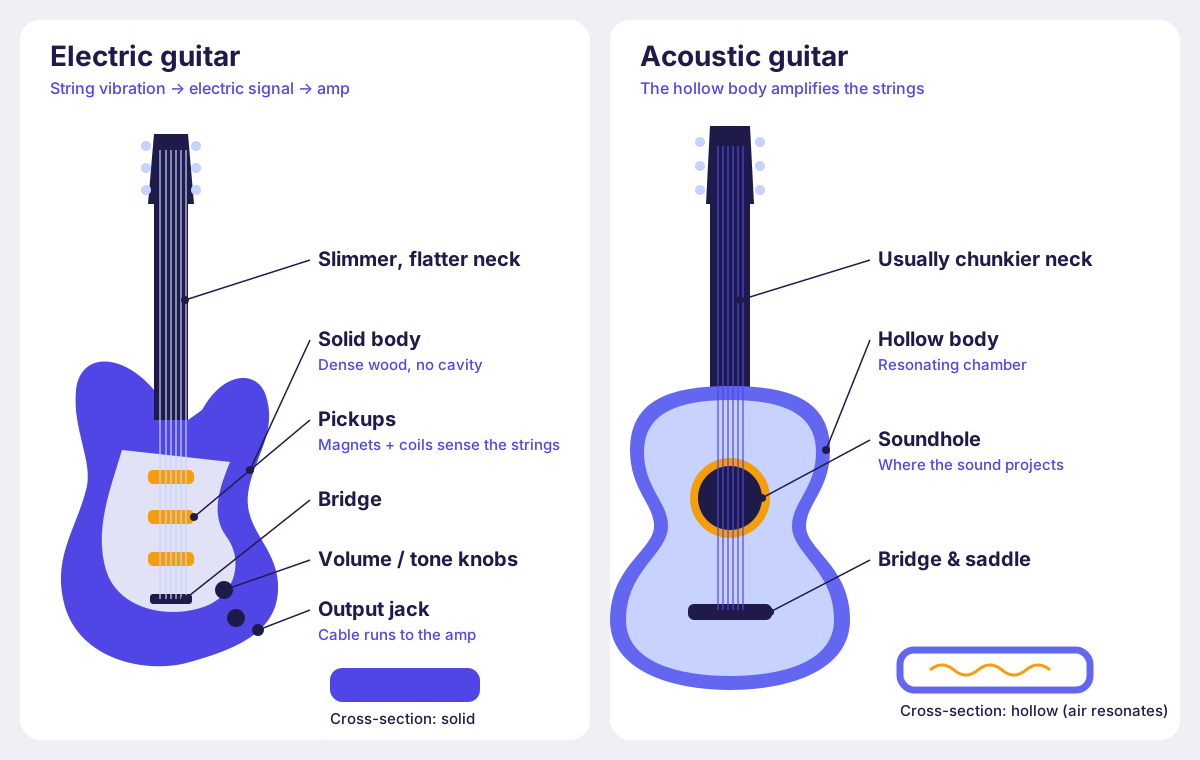
Acoustic guitar: hollow body and soundhole
A steel-string acoustic has a hollow body. When you pluck a string, the vibration travels through the bridge into the thin top, and the top and the air inside the body resonate together. The round soundhole lets that resonance project outward. That is why an acoustic can fill a room with no electricity at all.
Electric guitar: solid body and pickups
Most electric guitars are solid-body instruments made from a dense slab of wood. The body is not designed to amplify the strings, so unplugged you only hear a thin, quiet jangle. Instead, pickups (magnets wrapped in coils of wire) sit under the steel strings, sense their vibration, and convert it into an electrical signal. A cable carries that signal to an amplifier, which drives a speaker. Volume and tone knobs plus a pickup selector switch let you shape the sound right on the guitar.
You will also see hollow-body and semi-hollow electrics, popular in jazz and blues. They still rely on pickups and an amp. The typical beginner electric, though, is a solid-body.
Electric vs acoustic at a glance
Here is the short version before we dig into details. Treat these as typical tendencies; individual models vary.
| Feature | Electric guitar | Acoustic guitar |
|---|---|---|
| How sound is made | Pickups → amp and speaker | The hollow body resonates |
| Body | Usually solid, thin | Hollow chamber, deeper |
| Typical string set | Steel, roughly 9–42 or 10–46 | Steel, roughly 12–53 (light) |
| Action and tension | Lower and softer | Higher and stiffer |
| Neck | Often slimmer and flatter | Often chunkier |
| Required gear | Amp (or headphone amp) and cable | Just the guitar |
| Noise at home | Can practice silently on headphones | Naturally loud, hard to quiet down |
| Natural genres | Rock, metal, punk, blues, band music | Singer-songwriter, folk, country, fingerstyle |
Strings, tone, and the genres each one suits
Steel string gauges
Both electric and acoustic guitars use steel strings; the difference is thickness. String sets are named by the gauge of the thinnest (high E) and thickest (low E) strings in thousandths of an inch. A typical electric set is 9–42 or 10–46. A typical "light" acoustic set is around 12–53. Thicker strings at higher tension mean the same chord takes noticeably more finger pressure on an acoustic. Many players start on lighter acoustic sets such as extra light (10–47) or custom light (11–52) to make the first months easier.
Nylon strings mean a classical guitar
This trips up a lot of shoppers: a guitar with nylon strings is a classical guitar, a separate category from the steel-string acoustic. Nylon is gentle on the fingertips and sounds warm and round, but classical necks are wide and flat, so chord shapes feel different from both electric and steel-string acoustic. It is a great choice for classical repertoire, flamenco or bossa nova. For pop, rock or campfire songs, a steel-string guitar is the more natural fit. Never put steel strings on a classical guitar: the extra tension can damage a neck that was not built for it.
Tone and genre
An acoustic's bright, full, natural ring makes it ideal for singer-songwriter material, folk, country, acoustic pop, and fingerstyle. One guitar can cover rhythm and harmony behind a voice. An electric, run through an amp and maybe a pedal or two, can go from sparkling clean to heavily distorted, which is why it rules rock, metal, punk, blues, funk, and most band music. Long sustain, wide string bends, and palm-muted power-chord riffs are all far easier to pull off on an electric.
Playability: action, tension, neck shape, and sore fingers
For a beginner, the most noticeable difference is often not the sound at all, but how the guitar feels.
- Action: the height of the strings above the fretboard. Electrics usually ship with lower action, so a light touch is enough. Acoustics generally sit higher and need firmer pressure.
- Tension: heavier acoustic strings are tighter, so holding chords tires your fingertips and wrist faster. String bends that are easy on an electric can feel nearly impossible on an acoustic.
- Neck and body size: electric necks tend to be slimmer, and the thin body is easy to wrap your arm around. A big dreadnought acoustic can force a smaller player's strumming arm into an awkward reach. Smaller acoustic body shapes (concert, parlor, travel sizes) help.
- Sore fingertips: every guitar hurts for the first few weeks. Acoustics tend to hurt more and for longer; electrics are gentler. Calluses solve this for almost everyone.
You do not have to follow the old advice that "acoustic builds stronger fingers, so start there." Quitting because it hurts is a far bigger risk than starting on the easier instrument. That said, it is true that players who start on acoustic often find electrics feel effortless later.
What gear you need and what the total setup includes
Comparing guitar prices alone is misleading. What matters is the complete setup you need before you can actually play. Prices vary widely by brand, region, and year, so instead of quoting numbers, here is what goes into each setup.
Starting on electric guitar
- The guitar
- An amp: a small practice amp is plenty for home. Pick one with a headphone jack so you can play late at night.
- Or a headphone amp: a pocket-sized device that plugs straight into the guitar's output jack so you hear everything through headphones. It takes up almost no space. Another route is an audio interface and amp-modeling software on a computer.
- A cable: a standard instrument cable (10 to 15 feet is typical) between guitar and amp.
- Effects pedals (optional): you do not need any at first. Many modern practice amps have distortion and other effects built in.
- Shared basics: a tuner, picks, a strap, spare strings, and a gig bag or case.
Starting on acoustic guitar
- The guitar
- Shared basics: a tuner, picks, spare strings, and a gig bag. If you only play seated, a strap can wait.
- Optional: a capo (very handy for changing keys to fit your voice) and a music stand.
In short, an acoustic is ready the moment you buy it, while an electric needs an amp or headphone amp plus a cable. That is why people say "for the same budget, more of your money goes into the acoustic itself." On the other hand, many stores sell electric starter packs that bundle a guitar, small amp, cable and accessories, so check exactly what is included before you buy. For detailed buying criteria, see how to choose an electric guitar.
Noise and where you practice
For many people, especially those in apartments, dorms, or homes with thin walls, the practical deciding factor is noise.
- Electric: through a headphone amp or an amp's headphone jack, the only sound that escapes is the faint unplugged string noise. Late-night practice becomes realistic. Just know that even that unplugged jangle can carry in a silent room at midnight.
- Acoustic: its whole design exists to be loud, so there is only so much you can do. Playing with your fingers or a thin pick and keeping practice to daytime hours are the realistic options. Soundhole covers cut some resonance (and feedback when plugged in) but do not make the guitar quiet.
If your only free time is after everyone else is asleep, an electric has a clear advantage. If you love the acoustic feel but need to stay quiet, look at silent guitars, which strip the body down to a frame and send the sound to headphones.
Electric or acoustic guitar for beginners: choose by your goal
The honest answer to "electric or acoustic guitar for beginners?" is: it depends on what you want to play. Work through these questions in order.
- Write down five songs you want to play Listen to the guitar on the original recordings. Is it mostly acoustic or electric? That usually settles it.
- Check when and where you will practice If most of your practice will happen at night at home, give the electric extra points.
- Decide whether you will play alone or with others Singing along on your own points to acoustic; joining a band points to electric.
- Hold both in a store Strap each one on and try a few basic chords like C, G and Am. Your body will usually tell you which feels right.
- Buy the guitar you will want to pick up every day A look and sound you love matter more for motivation than most people expect.
For singing and accompanying yourself: acoustic
If your goal is to sing while you play, a steel-string acoustic is the best fit. There is nothing to plug in, and simple strumming fills out rhythm and harmony behind your voice. A handful of chords and a few strumming patterns cover a huge number of songs.
For playing in a band: electric
If you want to jam with friends or start a band, an electric is the natural starting point, because most band guitar parts are written around an electric sound. When you get there, our band rehearsal practice guide covers how to prepare.
For rock and metal: electric, no question
Distorted riffs, power chords, palm muting and big bends are the vocabulary of rock and metal, and you cannot get that sound from an acoustic. If this is the music you love, skip the debate and start on electric. Hearing your favorite sound come out of your own hands is the strongest motivation there is.
For fingerstyle: acoustic
Fingerstyle, where one guitar plays melody, bass and harmony at the same time, is a signature acoustic style. Percussive techniques like tapping the body only work because of the hollow chamber. If classical repertoire appeals to you more, consider a nylon-string classical guitar instead.
What is an acoustic-electric guitar?
An acoustic-electric guitar is a regular steel-string acoustic with a built-in pickup and preamp. Unplugged, it plays exactly like any acoustic. When you need more volume for a gig, open mic, or busking, you plug it into an amp or PA. Because it is an acoustic at heart, the strings, feel and unplugged volume are the same as any acoustic. Think of it as "an acoustic you can plug in," not a halfway point between electric and acoustic, and it will not sound like an electric through a guitar amp. If you plan to perform, starting with an acoustic-electric is a sensible move.
Switching later, and common myths
Moving from one to the other
Good news: nearly all of your fundamentals carry over. Chord shapes, note locations on the fretboard, picking and strumming, and above all timing and rhythm work the same on both instruments.
- Acoustic to electric: the light strings make it easy to press too hard and bend notes slightly sharp. Learn to relax your fretting hand, and build muting habits, because an amp exposes every stray string noise.
- Electric to acoustic: heavier strings and higher action mean sore fingertips again for a while, and barre chords may feel like a workout. Short, frequent sessions get you through the adjustment period.
Common myths
- "Electric guitar is too hard for beginners." If anything, light strings and low action make the first weeks easier. There is just one more cable to plug in.
- "You have to learn acoustic first to build real technique." Fundamentals develop on either guitar. Consistency matters far more than the starting instrument.
- "You cannot practice electric without an amp." Chord shapes and fingering drills work fine unplugged. You will want an amp or headphone amp to hear your real tone, though.
- "An expensive guitar will make you improve faster." At the beginner stage, a good setup (comfortable action, stable tuning) matters much more than price.
Whichever you choose, build your rhythm first
On either guitar, the thing that falls apart most often for beginners is not the chords, it is the rhythm. You rush or drag while switching chords, or lose the rests in a sixteenth-note strumming pattern. One practical fix is to enter the strumming pattern or riff rhythm you are working on into Rhythm Helper as notes and rests, then play it back. It clicks exactly the rhythm you entered and highlights the note you should be playing, so you can lock it in at a slow BPM and raise the tempo gradually. The free browser version gives you two bars, which is enough to check a one-bar pattern. For more on strumming, see guitar strumming rhythm practice, and for a full learning roadmap, the guitar self-study guide.
Frequently asked questions
Is electric or acoustic guitar easier for beginners?
For fretting, an electric is usually easier because its strings are lighter and sit lower over the fretboard. The trade-off is extra gear: an amp or headphone amp and a cable. An acoustic is ready to play immediately but hurts the fingertips more in the first few weeks. Choose based on the music you want to play rather than difficulty alone.
Should I get an electric guitar if I live in an apartment?
For noise, yes. With a headphone amp or an amp's headphone jack, only the faint unplugged string sound escapes. An acoustic is designed to be loud and is hard to quiet down, so daytime practice is the realistic option.
Is a classical guitar the same as an acoustic guitar?
No. A steel-string acoustic uses steel strings, while a classical guitar uses nylon strings, has a wider and flatter neck, and sounds warmer. The string tensions are very different, so never swap string types between the two.
Does an acoustic-electric guitar sound like an electric guitar?
No. An acoustic-electric is an acoustic with a pickup, so plugging it in mainly makes its acoustic sound louder. The strings and feel are the same as a regular acoustic.
Can I switch from acoustic to electric guitar later?
Absolutely. Chords, fingering, strumming and timing all carry over. On electric you mainly need to relax your fretting hand so you do not press notes sharp, and develop muting habits because the amp exposes extra string noise.