How to Choose a Digital Piano: A Buying Guide for Self-Taught Beginners
Learn how to choose a digital piano as a beginner: weighted keys vs semi-weighted, sound engines and polyphony, headphones, pedals, form factors, brands, and a store test checklist.
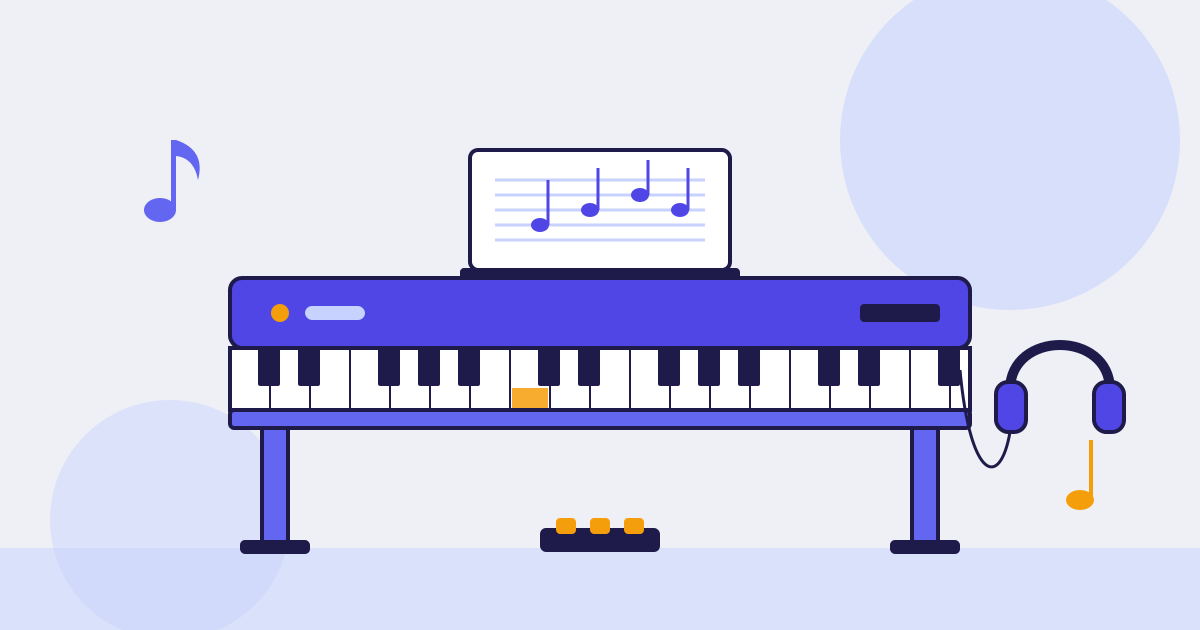
Once you decide to teach yourself piano, the first real hurdle is buying the instrument. Walk into a music store and you will see a row of nearly identical black slabs; search online and you are buried in terms like "graded hammer action," "256-note polyphony," and "Bluetooth MIDI." This guide explains how to choose a digital piano from the point of view of an adult or teen beginner learning at home. Rather than pushing a specific model, the goal is to give you criteria you can apply to any piano you look at, this year or five years from now.
Here is the short version. Prioritize in this order: (1) 88 weighted, hammer-action keys, (2) output that fits where you practice (headphones, neighbors, room size), (3) a proper sustain pedal, and (4) everything else, such as the number of sounds, apps, and finish. The rest of this article walks through why, one step at a time.
Digital piano vs keyboard vs acoustic piano
People use "keyboard," "electric piano," and "digital piano" almost interchangeably, but they describe very different instruments. If you want to learn piano, sorting out these three categories first will make every "best digital piano for beginners" list much easier to read.
| Acoustic piano | Digital piano | Keyboard / synthesizer | |
|---|---|---|---|
| Keys | 88 | Usually 88 | Commonly 61 or 76 |
| Key feel | Real hammer mechanism | Weighted hammer action that imitates it | Often light, spring-loaded synth action |
| Sound | Vibrating strings; the whole room resonates | Sampled and/or modeled piano sound | Many sounds; piano is just one of them |
| Volume / headphones | Hard to control (unless it has a silent system) | Volume knob and headphone jacks | Volume knob and headphone jack |
| Maintenance | Regular tuning, humidity control | No tuning | No tuning |
| Moving it | Heavy; usually needs movers | Light to heavy depending on style | Light and portable |
| Best for | Long-term students with space and no noise limits | Most people learning piano at home | Songwriting, bands, exploring sounds |
For most beginners practicing in an apartment, condo, or shared house, a digital piano is the realistic choice. A keyboard is cheaper and lighter, but its keys are light and there are fewer of them, so you will outgrow it quickly once you work through a method book. An acoustic piano offers a depth of touch and tone nothing else matches, but it makes sense only when you can handle the volume, tuning, and floor space.
Why 88 weighted keys matter most
Beginners often think, "I'm just starting, so something light is fine." It is actually the other way around. The keyboard you use while your finger strength and habits are forming has the biggest long-term effect on how you play.
Why 88 keys?
The first pieces in most method books fit on 61 keys. But within months you will meet pieces where your hands spread toward both ends of the keyboard, and many pop accompaniment and classical arrangements simply run off the edge of a 61-key board. An 88-key digital piano also uses the same key width and layout as an acoustic piano, so your sense of where things are carries over when you sit down at a real piano in a lesson studio or a friend's living room. If you plan to learn piano, treat 88 keys as a requirement.
Weighted keys vs semi-weighted vs synth action
On an acoustic piano, pressing a key lifts a felt hammer that strikes the string. That is why the bass keys feel heavier than the treble keys and why the key pushes back against your finger. A digital piano's hammer action reproduces this with weighted levers, and most models use "graded" weighting that gets lighter as you move up the keyboard.
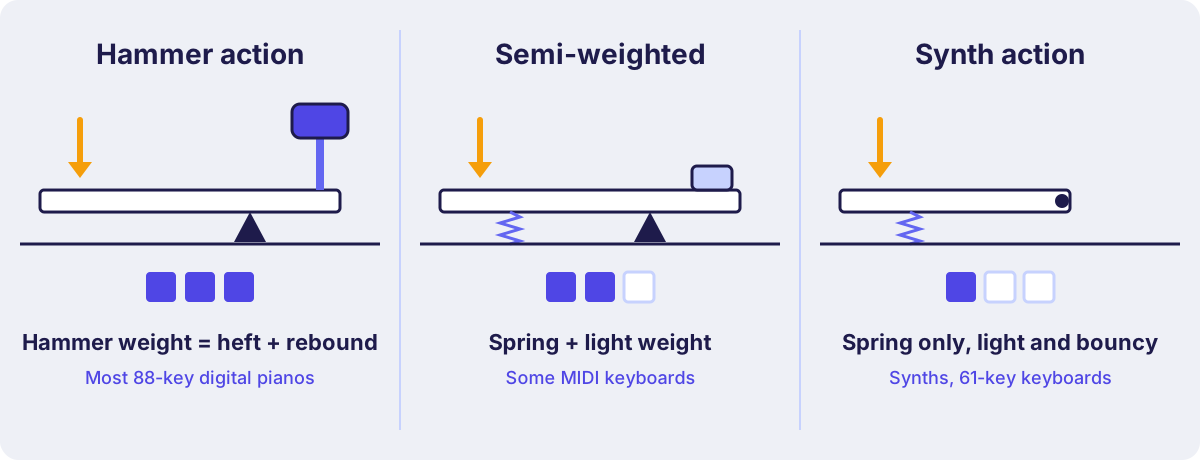
- Hammer action (fully weighted): the standard for learning piano. Nearly every digital piano uses some version of it.
- Semi-weighted: springs plus a light weight. Common on MIDI controllers. Better than synth action, but still noticeably lighter than a piano.
- Synth action: springs only, light and bouncy. Great for organ and synth parts, far from piano touch.
If you practice only on light, springy keys, the skill that matters most in early piano playing, controlling how hard you press to get soft (p) versus loud (f) sounds, does not develop well. When you later play a real piano, the notes may come out weak and your hands may tire quickly. So in the "weighted keys vs semi-weighted" debate, the answer for a piano learner is fully weighted, every time.
Key materials and extras
As you move up a brand's lineup, you will see wooden keys (full or hybrid), longer key pivots so the weight changes less when you play further back on the key, textured key surfaces that keep your fingers from slipping, and "escapement," a tiny notch that mimics the feel of a grand piano hammer releasing. None of these are essential on day one. But if you have to choose between more sounds and better keys at the same price, put the money into the keys. Also check for adjustable touch sensitivity. A lighter setting makes it easier to get a full sound while your fingers are still building strength.
Sound engines and polyphony explained
Sampling vs modeling
Digital pianos make their sound in two main ways. Sampling plays back recordings of a real grand piano, captured note by note at several dynamic levels. Modeling calculates the physical behavior of strings and resonance in real time. Many current instruments blend both. Neither approach is automatically better. What matters is what you hear: does the tone change naturally (not just get louder) as you play the same key harder, and does the sound bloom when you hold the pedal?
How much polyphony do you need?
Polyphony is the maximum number of notes the piano can sound at once. You have only ten fingers, so it seems like a small number would do. But when you hold the sustain pedal and play a fast arpeggio, every earlier note keeps ringing and uses up a voice. Resonance simulation and layered sounds use voices too. As a rule of thumb, 64-note polyphony can cut notes off in pedal-heavy pieces, while 128 or more is comfortable for beginner to intermediate practice. Higher numbers are nice to have but should not decide your purchase.
Speakers, headphones, and practicing in an apartment
If you share walls or floors with neighbors, "how well can I keep this quiet?" matters as much as "how good does it sound?"
Speakers
Speaker wattage alone tells you little. Speaker placement (pointing down at the floor or up toward the player) and cabinet design change what you actually hear. In a small room, a big output number matters less than whether the bass stays full at low volume. Some models include a feature that adjusts the tone at quiet levels for exactly this reason.
Headphone practice
- Two headphone jacks let a teacher or family member listen along.
- Check the jack size (1/8-inch mini or 1/4-inch standard) and buy an adapter if needed.
- Look for a headphone mode that adds a sense of space so the sound does not feel trapped inside your head.
- Bluetooth earbuds can add latency. For practice, plan on wired headphones.
The noise headphones don't stop
Headphones silence the speakers, but the thump of the keys and the knock of the pedal still travel through the floor to the unit below. If you practice late at night:
- Put a dense rubber mat or anti-vibration pads under the stand and pedals.
- Leave a small gap between the piano and the wall so vibration doesn't travel through it.
- Key noise varies by model even among hammer actions. In the store, put on headphones and listen only to the mechanical sound of the keys.
Pedals and form factors: portable, slab-on-stand, console
Pedals
The right-hand sustain (damper) pedal is used in almost every piece. Many portable digital pianos ship with a small footswitch that slides around on the floor and only knows "on" or "off." Real pianists use half pedaling, pressing the pedal partway to control how much the sound rings, so in the long run you want a piano-style pedal that supports half-pedal detection.
A three-pedal setup adds the soft (left) and sostenuto (middle) pedals. Beginners rarely need them, but if you plan to study classical repertoire, check whether the model can take a three-pedal unit so you don't have to replace the piano later.
Form factors
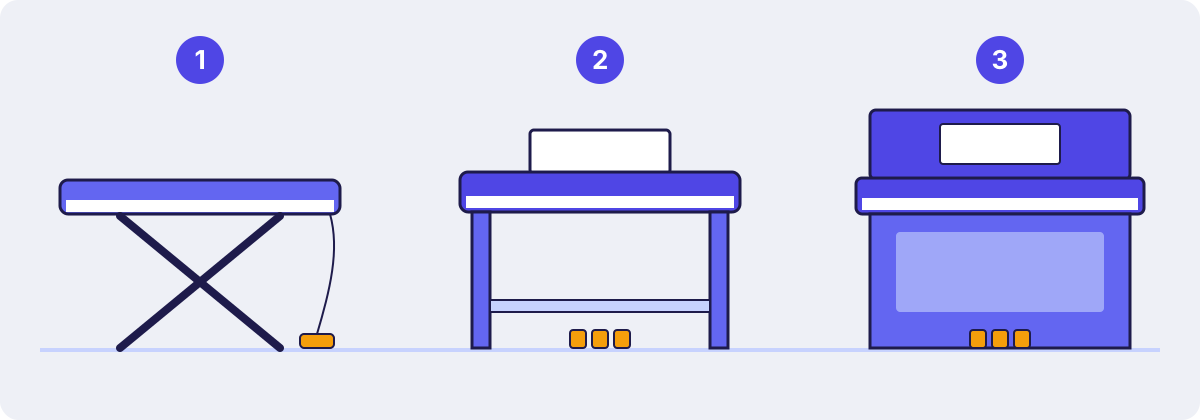
- Portable: you can lift the piano off its stand, which suits renters who move often and small rooms. The stand and a decent pedal are often sold separately, so compare total cost. X-stands can wobble; a matching stand is steadier.
- Slab on a furniture stand: a portable body mounted on a dedicated stand with a pedal unit. A middle ground between portability and stability.
- Console (cabinet): cabinet and three pedals in one piece, with a music rest and often a key cover. Very stable and closest to an upright piano posture. Heavier and less movable, but very satisfying if the piano will stay put for years.
Whatever you choose, make sure you can match key height and bench height. An adjustable piano bench makes it much easier to keep your wrists level.
Connectivity: USB-MIDI, Bluetooth, and apps
Connectivity takes up a lot of space on spec sheets. Here is what actually helps a self-taught player:
- USB-MIDI (USB to Host): connect to a computer or tablet for sheet music apps, learning apps, and recording software (DAWs). Some devices need an adapter.
- Bluetooth MIDI: sends key data to apps without a cable. Support differs between models, so check the spec sheet.
- Bluetooth audio: plays music from your phone through the piano's speakers so you can play along. This is a different feature from Bluetooth MIDI.
- Manufacturer apps: control sounds, the metronome, recording, and practice logs from your phone. Check which models and operating systems are supported.
- Recording: listening back to your own playing is one of the best feedback tools you have as a self-learner. Make sure you can record somehow, on the piano or through an app.
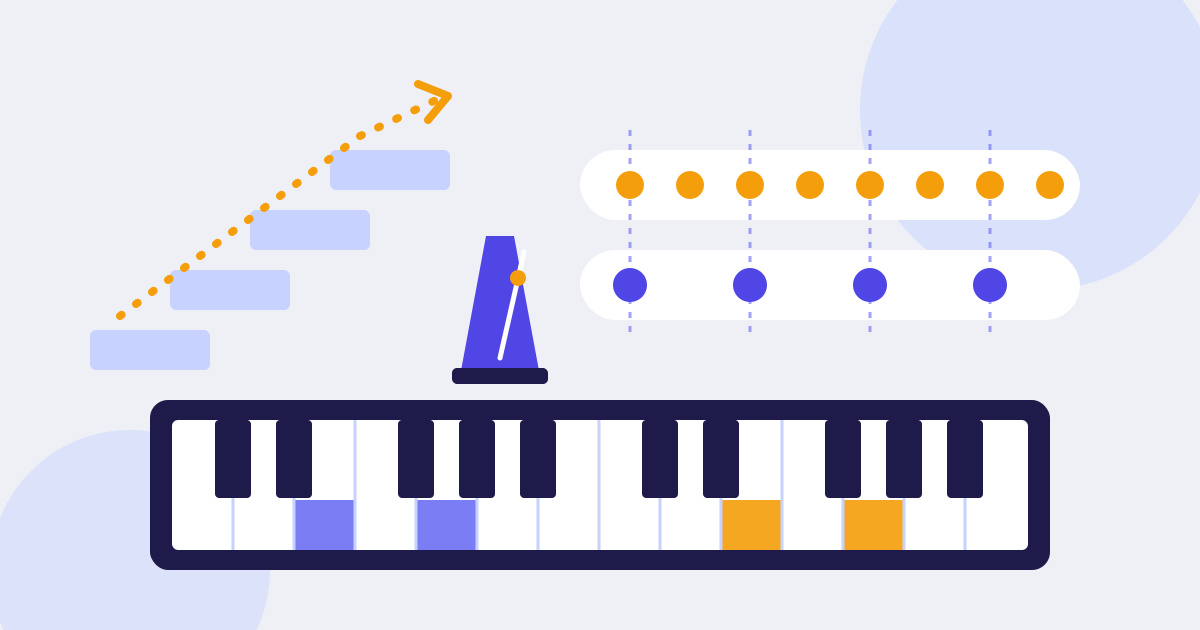
Most digital pianos have a built-in metronome, but it only counts the beat, so dotted notes, triplets, and syncopation are still up to you to count. Those rhythms drift easily when you practice alone on headphones. A tool like Rhythm Helper, where you type in the exact rhythm from your score and hear it played back with each note highlighted, helps you learn how a passage should sound before your hands lock it in. For more on this, see our rhythm and timing practice guide.
Brand personalities and budget tiers
Each brand has a general reputation, but key actions and sound engines vary a lot between series and generations within the same brand. Treat the notes below as broad tendencies; playing the piano yourself is what settles it.
- Yamaha: an acoustic piano maker with a very wide lineup, from portables to home models to premium cabinet pianos. Its sound engines are based on its own concert grands, and dealers and service are easy to find in many regions.
- Roland: an electronic instrument specialist, widely regarded for modeling-based piano sound and strong digital features such as Bluetooth and apps.
- Kawai: an acoustic piano maker known for its focus on key actions; higher models offer actions with wooden keys.
- Casio: strong value at the entry level, with many slim, lightweight portable designs.
What to expect at each budget tier
Prices change with season, sales, and region, so here are tiers instead of numbers:
- Entry level: mostly portable 88-key hammer-action pianos. The stand and pedal are often extra, so add them up. Perfectly good for learning your first year or two.
- Mid-range: more slab-on-stand and console models, with better key feel, speakers, three pedals, and app support. The sweet spot if you plan to stick with lessons for several years.
- High end: wooden keys, escapement, premium cabinets, and speaker systems. For players looking for something close to an acoustic piano replacement.
It helps to choose your method book at the same time. See our piano method book guide, and for a first-three-months plan, our beginner's guide to learning piano on your own.
Used digital piano checklist and in-store test
Buying used: what to check
Because digital pianos never need tuning, the used market is busy. Repairs can be expensive, though, so check the following:
- Every key, one at a time: play all 88 keys with the same force. Listen for dead keys or keys that are noticeably louder or softer than their neighbors.
- Key noise: with headphones on, play the keys and listen for clicks, sticky keys, or keys that return more slowly than others.
- Pedals: check the cable connection, half-pedal response, and any squeaking.
- Speakers and jacks: turn the volume up and listen for distortion; plug in headphones and listen for crackling.
- Age and parts: very old models may be hard to get parts for. Confirm the power adapter, music rest, pedals, and stand hardware are all there.
- Transport: console models are heavy and may need to be partly disassembled. Include moving costs in your budget.
In the store, test in this order
- Set the bench height first Your elbows should be roughly level with the keys, or you can't compare touch fairly between pianos.
- Play as softly as you can Press one key very gently. A good action lets you produce a quiet, steady tone without notes dropping out. Soft control makes the biggest day-to-day difference.
- Build from soft to loud Play the same note from p to f and listen for the tone getting brighter, not just louder.
- Play fast repeated notes Hammer the same key quickly and see whether it returns in time and feels easy to follow.
- Hold the pedal and play arpeggios With the sustain pedal down, sweep from bass to treble. Listen for notes cutting off (not enough polyphony) and for rich resonance. Try half pedaling too.
- Listen again on headphones You will probably practice on headphones at home, so check headphone sound and key noise. Bring your own headphones if you can.
- Play something you actually practice A few bars of a piece you know tells you whether your hands stay comfortable and whether you like the sound.
Common digital piano buying mistakes
- "I'm a beginner, so light keys are fine." The most common mistake. If you want to learn piano, start with 88 hammer-action keys.
- Comparing by number of sounds and auto-accompaniment styles. They barely affect learning piano. Focus on the keys and one good piano sound.
- Looking only at the price of the piano itself. Add the stand, a piano-style pedal, a bench, headphones, and a floor mat.
- Forgetting about the neighbors. Headphones alone don't stop the thumps that travel through the floor.
- Buying online from specs alone. Key feel is personal. If at all possible, play it in a store at least once.
- Researching forever. Any model that meets the criteria above will let you learn well. Fifteen minutes of practice a day will do more for you than another week of comparing spec sheets.
Once the piano is home, start with reading music and rhythm. Our how to read sheet music guide covers the basics.
Frequently asked questions
Do beginners really need 88 weighted keys?
If your goal is to learn piano, yes. A 61-key keyboard runs out of range quickly, and the finger control you build on light keys doesn't transfer well to a real piano. If you mainly want to write songs or explore sounds, a keyboard can be fine.
What's the difference between weighted keys and semi-weighted keys?
Weighted (hammer action) keys use weighted levers to imitate a piano hammer, often heavier in the bass. Semi-weighted keys use springs plus a light weight, so they feel lighter and bounce back faster. For piano practice, fully weighted keys are the better choice.
How much polyphony does a digital piano need?
As a rule of thumb, 128 notes or more is comfortable for beginner to intermediate practice. 64 can cut notes off in pedal-heavy pieces or with layered sounds. More than that is a bonus, not a priority over key quality.
Will headphones make my digital piano silent for my neighbors?
They silence the speakers, but key thumps and pedal knocks still travel through the floor. Use a dense mat or anti-vibration pads, keep the piano slightly away from the wall, and go easy on the pedal late at night.
Is it okay to buy a used digital piano?
Yes, since digital pianos never need tuning. Test every key for sound and noise, check the pedals, speakers, and headphone jacks, make sure all parts are included, and avoid very old models that may be hard to repair.
Can I switch to an acoustic piano later if I learn on a digital one?
If you practice on 88 hammer-action keys, your hand position and sense of the keyboard carry over. Touch and resonance do differ, so play an acoustic piano at a lesson or practice room now and then to stay calibrated.