Classical vs Jazz Piano — The Real Differences in Rhythm, Harmony and Practice (Plus a 4-Week Jazz Starter Plan)
Classical vs jazz piano compared: sheet music vs lead sheets, swing rhythm and triplets, 7th chords and shell voicings, practice habits, plus a 4-week plan to learn jazz piano.
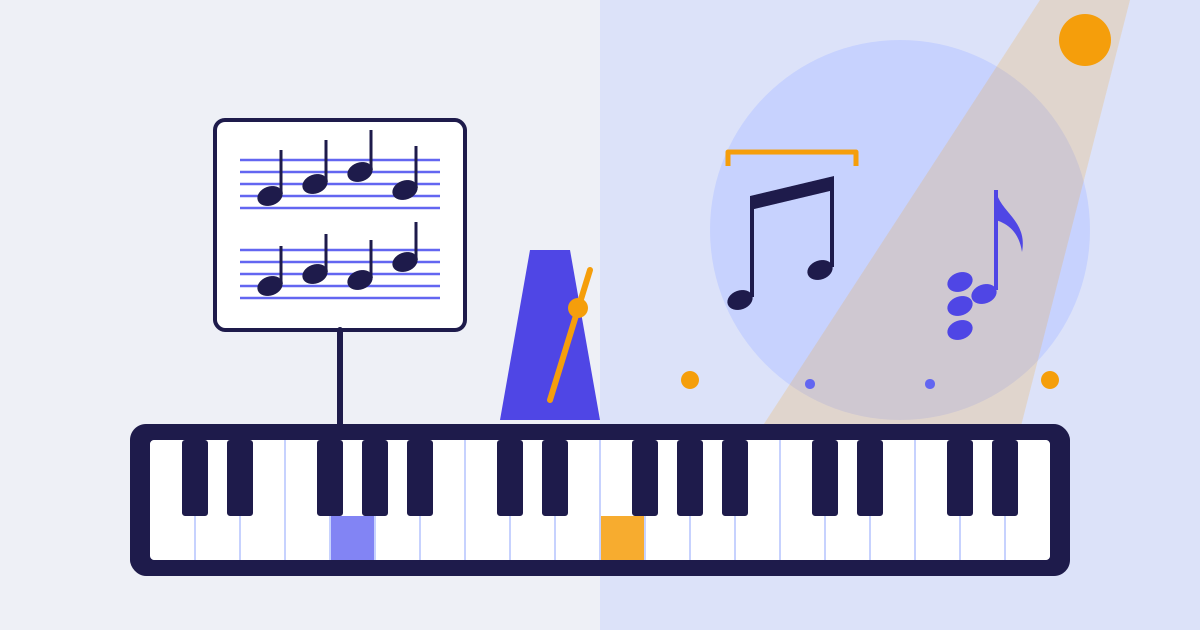
If you have spent a few years on classical piano and then watch a jazz trio play, it can feel like a different instrument. The difference between classical and jazz piano is not just a matter of taste. It runs through how you read music, how you feel rhythm, how you build chords, how you use the pedal, and how you practice day to day. This guide walks through classical vs jazz piano point by point, unpacks the swing feel with diagrams (it is the part most crossover players struggle with), helps you decide which style to learn first based on your goals, and ends with a practical four-week plan for anyone who wants to learn jazz piano on their own.
Classical vs jazz piano at a glance
Here is the big picture first. Treat the table as general tendencies rather than hard rules. The two worlds overlap more than people think: Baroque keyboard players improvised over figured bass, and plenty of jazz pianists have serious classical training.
| Aspect | Classical piano | Jazz piano |
|---|---|---|
| What you read | A complete score with every note, dynamic and articulation | A lead sheet: melody plus chord symbols |
| Core skill | Interpreting and realizing the composer's intent | Improvising and arranging over a chord progression |
| Rhythm | Even (straight) eighths, expressive rubato | Swing eighths (long-short), weight on 2 and 4, syncopation |
| Harmony | Triads as the basic unit; 7th chords used for function | 7th chords as the basic unit; 9ths, 11ths and 13ths added freely |
| Voicings | Written out by the composer | Chosen by the player (shells, rootless, etc.) |
| Touch and pedal | Singing legato, wide dynamics, pedal for resonance | Lighter, crisper attack; pedal used sparingly in swing |
| Practice | Scales, études and graded repertoire | Listening, transcribing, running progressions in all 12 keys |
| Ensemble role | Solo recitals, concertos, chamber music, accompanying | Comping in a trio or band, soloing, sometimes walking bass lines |
It is tempting to summarize this as "jazz is free, classical is strict," but that misses the point. Both styles have freedom; it just lives in different places. A classical pianist's freedom sits in tone color, phrasing and subtle tempo shaping. A jazz pianist's freedom extends to choosing the notes themselves, but that freedom is exercised inside a tight framework of chord changes and rock-solid time.
Sheet music vs lead sheets: interpreting vs creating
Classical: read deeply what is written
Open a Chopin nocturne and you will find pitches, rhythms, dynamics, pedal markings and often fingerings. Your job is to read all of that accurately and then shape the phrases and the sound within those boundaries. That is why classical training puts sight-reading and finger technique at the center of progress. If notation still slows you down, our guide on how to read sheet music is worth reviewing whichever style you choose.
Jazz: fill in the music from chord symbols
A jazz standard's lead sheet gives you a single melody line and chord symbols like Dm7 – G7 – Cmaj7. What the left hand plays, how much you reshape the melody, and which notes you pick for a solo are all up to you. Playing a tune differently every time is normal. So for jazz piano beginners, the first priority is not fast fingers but the ability to turn a chord symbol into a hand shape instantly, and a good ear.
The rhythm gap: swing eighths and the triplet feel
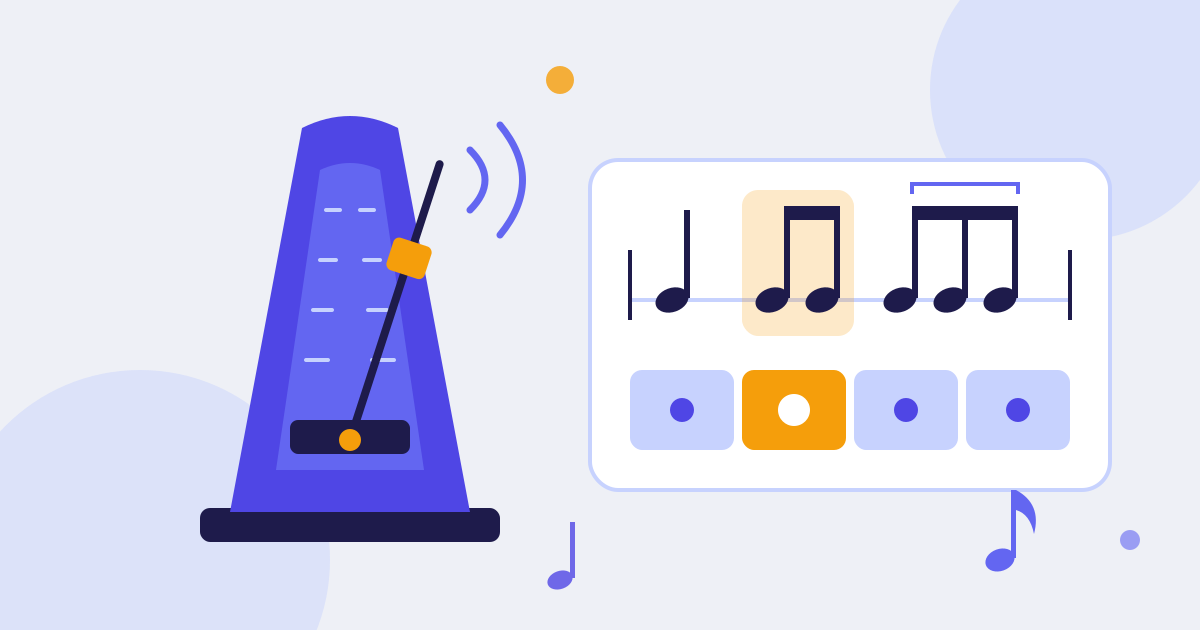
Rhythm is usually the first thing your ear notices. In classical music, two eighth notes split the beat exactly in half. In swing, the same two written eighths are played long-short. These are called swing eighths, and the ratio is usually explained using triplets: the beat is divided into three, and the first note takes two parts while the second takes one, like a triplet quarter followed by a triplet eighth.
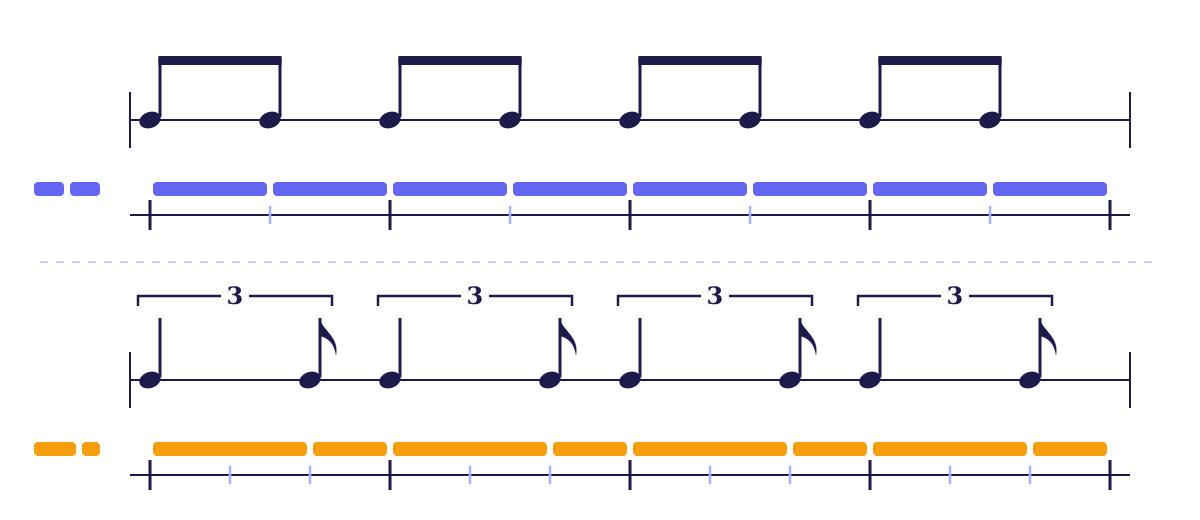
Two things are worth remembering. First, 2:1 is a starting point, not a law. As the tempo rises, the ratio tends to get closer to even; in slow tunes it can stretch out more, and every player swings a little differently. Second, swing is about accent as much as duration. Leaning slightly into the short offbeat note makes the line roll forward. If you keep the classical habit of weighting the downbeat, the rhythm can sound lopsided even when the ratio is right.
The backbeat: weight on 2 and 4
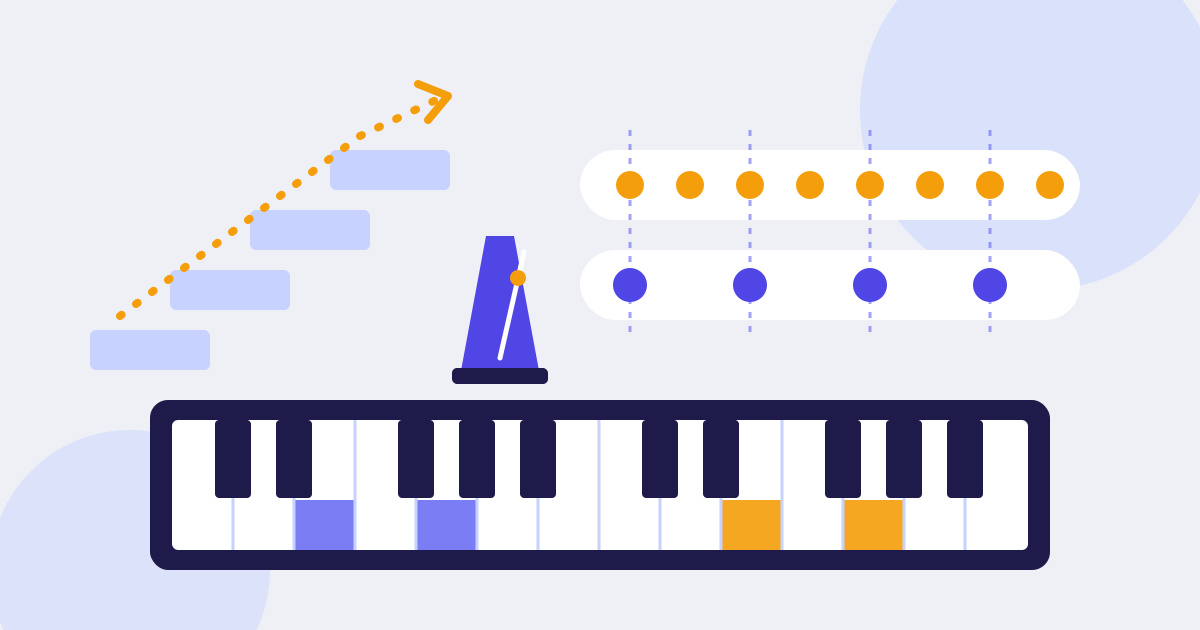
In classical 4/4, beat 1 is normally the strongest and beat 3 comes next. In swing, the drummer's hi-hat closes on beats 2 and 4, and audiences snap their fingers on 2 and 4. This is the backbeat. It is why teachers so often suggest setting a metronome to click only on 2 and 4 when you practice jazz. The moment you start hearing the click as 2 and 4 instead of 1 and 3, the same tempo starts to groove differently.
Syncopation: playing around the beat
A jazz pianist's left hand, the comping hand, does not plunk a chord on every beat. Leaving the downbeat empty and hitting the offbeat, or anticipating the next chord by half a beat, are the basic vocabulary of syncopation. The diagram below shows two of the most common comping rhythms.
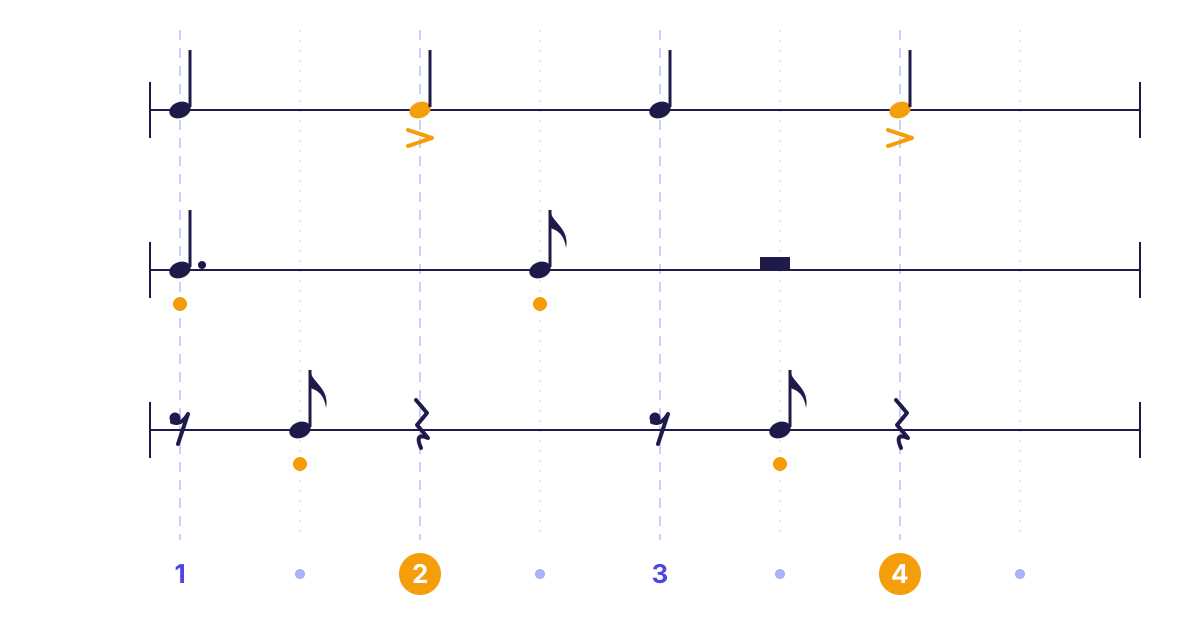
When you swing the Charleston rhythm (dotted quarter plus eighth), the second hit lands on the last triplet of beat 2, so it sounds later and shorter than it would with straight eighths. Hearing that difference clearly is half the battle. In a rhythm tool like Rhythm Helper, you can write the swing pattern out with triplets, or build an anticipated comping rhythm with ties, and play it back. It clicks exactly the rhythm you entered and highlights the note to play, so you can see and hear where each offbeat falls. Note that it does not apply a swing feel automatically; you write the long-short durations yourself, either with triplets in 4/4 or as quarter-eighth pairs in 12/8.
Harmony and voicings: from triads to 7th chords and tensions
Classical harmony treats the triad (C–E–G) as its basic building block and uses seventh chords where their function is clear, such as the dominant seventh. In jazz, the seventh chord is the basic unit. A chart that says C is often played as Cmaj7 or C6, and players add color with tensions such as 9ths, 11ths and 13ths. Just as important, the player decides how to stack and space those notes. That choice is called the voicing.
Shell voicings: root, 3rd and 7th
Shell voicings are the first thing most jazz piano beginners learn. You play only the root plus the 3rd and 7th, the two notes that define a chord's quality. The 5th adds little to the chord's identity, so leaving it out does not make the sound feel empty. Here is the most common progression in jazz, the ii–V–I, in C major (Dm7 – G7 – Cmaj7):
- Dm7: D + C (7th) + F (3rd) — root, 7th, 3rd
- G7: G + B (3rd) + F (7th) — root, 3rd, 7th
- Cmaj7: C + B (7th) + E (3rd) — root, 7th, 3rd
Alternating the "root–7–3" and "root–3–7" shapes keeps the upper voices moving by half or whole step (C to B, F held, then F to E). This is the same voice-leading logic you learned in classical harmony, applied to a new vocabulary.
Rootless voicings: let the bassist take the root
In a trio or band, the bassist covers the root, so the pianist drops it and fills the middle register with combinations like the 3rd, 5th, 7th and 9th. These are rootless voicings. For example: Dm7 as F–A–C–E (3–5–7–9), G7 as F–A–B–E (7–9–3–13), and Cmaj7 as E–G–B–D (3–5–7–9). Your hand barely moves while the harmony keeps progressing. Played solo, though, rootless chords can sound ambiguous without a bass note, so solo pianists mix them with left-hand roots or shell voicings.
Touch, pedal and practice habits
Touch and pedal
Classical playing prizes a singing legato, a wide dynamic range and resonance shaped with the pedal. In jazz, rhythmic clarity comes first, so the attack tends to be lighter and more defined, and the damper pedal is held down less. In swing comping especially, short chords need to lock in with the drums and bass, so it helps to control note lengths with your fingers instead of the pedal. Ballads are the exception: pedal is used generously there, so there is no need to treat "no pedal in jazz" as a rule.
How each style practices
Classical practice is about bringing a specific piece to a finished state: scales and arpeggios, études such as Czerny, and graded repertoire. Jazz practice centers on listening and transcribing. You listen to recordings you love on repeat, figure out a few bars by ear, run progressions like the ii–V–I through all 12 keys, and play the same tune differently every time. Steady time underpins both, and the metronome drills in our rhythm and timing practice guide work for either style.
Role in an ensemble
A classical pianist typically carries every voice alone in solo repertoire, and in concertos, chamber music or accompanying, plays the part on the page. A jazz pianist comps behind soloists with rhythm and harmony, takes a solo when it is their turn, and handles the bass line when there is no bassist. Listening and reacting to the other players is essential, which ties into our band and ensemble practice guide.
Tips for crossing over in either direction
Classical to jazz
- Get off the page: play familiar folk or pop songs from chord symbols only. Left-hand roots plus right-hand melody is plenty at first.
- Lean into the offbeats: when you play scales in swing eighths, put a light accent on the second note of each pair. Exaggerate it at first; it will feel strange, and that is fine.
- Listen a lot: learning jazz is like picking up an accent. Even 20 to 30 minutes a day of piano trio records helps, especially if you count along on 2 and 4.
- Drop the perfectionism: in improvisation, the real problem is rarely a "wrong note" but a note you stay on in the wrong place. Moving it a half step usually resolves it.
Jazz to classical
- Build reading stamina: add daily sight-reading of a few bars from easy pieces you have never seen.
- Get your straight eighths back: hands used to swing tend to bounce eighth notes without meaning to. Bach's Two-Part Inventions, with their steady eighths and sixteenths, are an excellent corrective.
- Respect fingerings: improvising lets you use whatever fingering is convenient, but classical repertoire needs settled fingerings for fast passages to be reliable.
Which should you learn first? Advice by goal
"Do I need classical training before I can play jazz?" comes up constantly. The short answer is no. A classical foundation helps with finger independence and reading, but you can start with jazz directly. Choose based on what you want to play.
| Your goal | Where to start | Why |
|---|---|---|
| Play classical masterworks | Classical | Reading and technique lead straight to the goal |
| Play jazz standards or lounge piano | Jazz, starting with chord basics | Lead sheets and voicings are usable right away |
| Accompany a band, choir or worship team | Chord-based accompaniment plus jazz harmony | Playing from chord symbols on sight is the key skill |
| Compose or arrange | Both in parallel | Classical voice leading plus jazz extended harmony |
| Not sure yet | Basic piano plus chords together | Reading and chord fluency together keep both doors open |
If you already have classical basics and are wondering what comes next, our intermediate piano self-study guide covers expanding repertoire and building a practice routine.
How to learn jazz piano: your first 4 weeks
This plan assumes you can play simple pieces hands together and read basic notation. About 30 to 45 minutes a day, five days a week, is enough. Start every session with a five-minute warm-up: metronome clicking on 2 and 4, scales in swing eighths.
- Week 1 — Blues and the swing feel Play a 12-bar blues in F (F7, B♭7, C7) with left-hand shell voicings. In the right hand, build short two-bar phrases from the F blues scale and repeat them. Start slow, around ♩ = 80, and check that your eighths sound like the triplet long-short feel.
- Week 2 — ii–V–I and comping rhythms Learn ii–V–I with shell voicings in C, F and B♭. Once the shapes are comfortable, switch to the Charleston and offbeat comping rhythms. If the rhythm feels shaky, enter it in Rhythm Helper and play it back, tapping along on your lap with the highlighted notes before moving to the keys.
- Week 3 — Your first standard Pick a standard full of ii–V–Is, such as "Autumn Leaves." Play it through with left-hand shells and right-hand melody, then start reshaping the melody's rhythm (anticipating, stretching), and finally try a short solo using only chord tones (1, 3, 5, 7).
- Week 4 — Rootless voicings and transcription Play ii–V–I with rootless voicings in two or three keys. At the same time, choose just four bars from a jazz piano recording you love and work them out by ear. Record yourself on your phone and compare the rhythmic feel with the original; the differences become obvious.
Four weeks will not make you a finished jazz pianist, but you will be at the real starting line: able to take a lead sheet and keep a tune moving with left-hand voicings and a swing feel. From there, add one tune at a time and gradually lengthen what you transcribe.
Whether you play Chopin or Monk, what turns notes into music is rhythm that is both accurate and alive. When an unfamiliar rhythm shows up, clap it and count it out loud first. If you want to hear it before you play it, a tool like Rhythm Helper that plays back exactly the rhythm you wrote can help you tune your ear before you take it to the keyboard.
Frequently asked questions
If I studied classical piano, how fast can I learn jazz piano?
Your technique and reading will help a lot, but swing rhythm, chord voicings and improvisation have to be learned separately. The habit of weighting the offbeat runs against classical instincts, so it takes deliberate practice. Most classically trained players still adapt faster than complete beginners because the physical foundation is already there.
Can you learn jazz piano on your own?
Yes. Many jazz musicians built their skills by listening to records and transcribing. The hard part of self-study is judging your own time, so practice with a metronome on 2 and 4 and record yourself regularly to compare with the recordings you are learning from.
Is swing rhythm exactly a triplet?
The triplet quarter-plus-eighth (a 2:1 ratio) is the most common way to explain swing, but the real ratio changes with tempo and player. Fast tunes swing closer to even; slow tunes can stretch further. Learn it as a triplet feel first, then adjust by ear as you listen to recordings.
What music theory do jazz piano beginners need?
Start with the notes of the three main seventh chords (major 7, minor 7 and dominant 7) and the ii–V–I progression. If you can play shell voicings (root, 3rd and 7th) in several keys, you can already play most standards in a basic form.
Will playing jazz hurt my classical playing?
You may catch yourself swinging eighth notes by accident, but switching styles consciously keeps that under control. Many players find that jazz improves their classical playing, because they start hearing harmony and understanding a piece's structure more clearly.